Async Generation States
AI calls have variable latency, so the UI communicates progress and prevents duplicate submissions.
AI Writing Tool
AI Content Generator helps creators turn a rough topic into usable written drafts without starting from a blank page. It is built for people who need blog posts, captions, and marketing copy quickly, while still controlling tone, length, and format.
Type
AI Writing Tool
Timeline
Built as a practical AI workflow product focused on prompt structure, editing, and export.
Focus
Product engineering
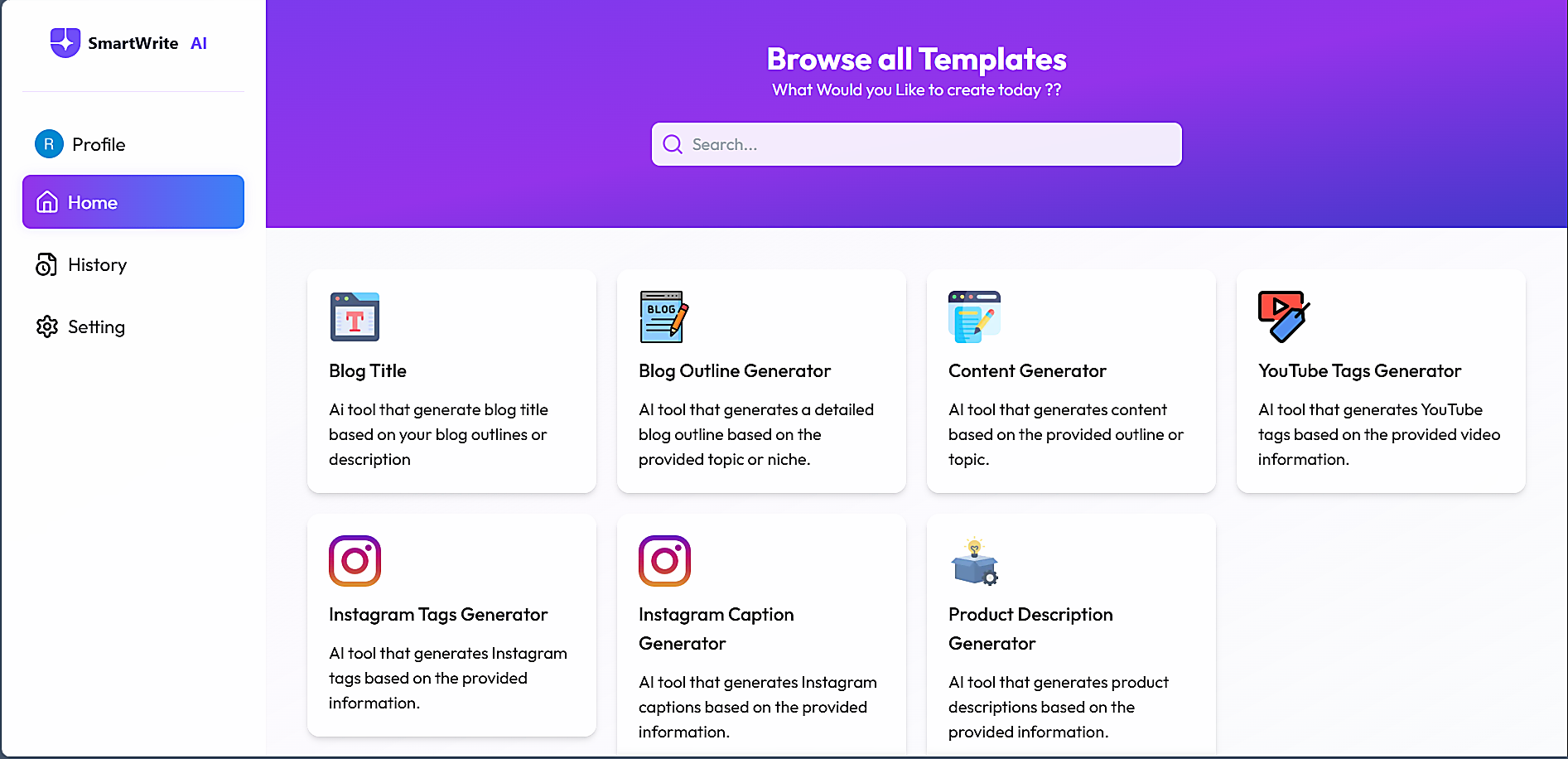
The project solves the gap between a generic chatbot and a focused content workflow. A blank prompt box is flexible, but it puts too much prompt-engineering burden on the user. This app packages repeatable writing patterns into templates.
The product experience centers on a controlled generation loop: select a template, provide intent, generate a draft, refine it, then export the result.
The user selects a content template and fills in topic, tone, and length.
The app validates inputs and converts them into a structured prompt.
The server calls the AI provider and receives generated content.
The UI displays the draft for editing and export.
AI calls have variable latency, so the UI communicates progress and prevents duplicate submissions.
Templates keep requests focused, reducing unnecessary token usage.
Inputs, output preview, and export controls can update independently.
Next.js build checks catch client/server boundary issues before deployment.
The idea started from noticing that content generation becomes more useful when the user is guided through structure.
The first prototype validated the core prompt flow: topic in, structured output out.
The next iteration added tone, length, and template choices so outputs could reflect different use cases.
The product was polished around editing, export, and making AI wait time feel intentional.
Small prompt changes can create large output differences. Templates reduce that variance.
Too much automation can make writing feel detached. The editor keeps the user in charge.
Generation delay is unavoidable, so the product needs clear feedback and duplicate-request protection.
Persistent drafts would make the app more useful for ongoing content planning.
Reusable voice settings would help teams produce more consistent writing.
Comparing generations would make refinement easier.
AI Content Generator turns prompt engineering into a product workflow. It shows how AI tools become practical when they combine generation with constraints, editing, and export.